
An annotated eulogy
A father's diary of grief, day 125

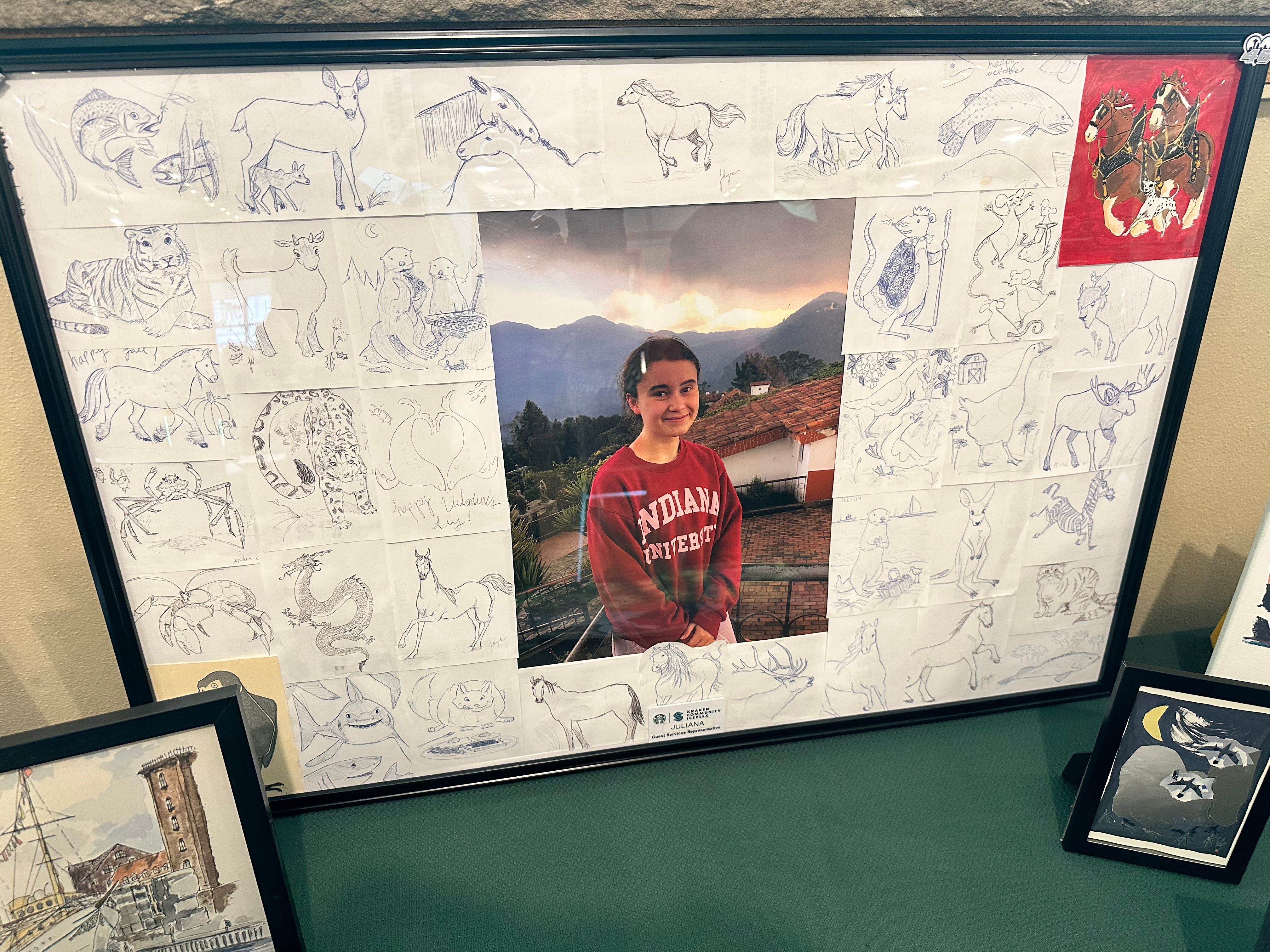
Today, June 6th 2026, we held a memorial service for Juliana at St. Andrew’s Church in Seattle. You can watch the entirety of the service if you like. It was not an easy service to attend, the week leading up to it stressful. (It doesn’t help that UW is about to head into Spring quarter finals week). But it was a lovely chance to hear reflections about what Juliana meant to so many. And to see a collage that her co-workers had created, coupling doodles she’d drawn on the job with the photo I took of her in Bogotá in 2022. I was glad to talk to several regular readers there.
I wore the same suit, same tie, same shirt, and same shoes (resoled!) that I had worn in the photo of Juliana and I at the father-daughter dance years ago, that she had transformed into a painting for me last father’s day.
Below this collage you’ll find the text of my remarks with a few annotations.
Si monumentum requiris, circumspice1
Thus reads the epitaph, in St. Paul’s cathedral, London, of Sir Christopher Wren, the architect who designed it.2 Although he’s buried there, you’ll find no statue of Christopher Wren, no obelisk, no grand sarcophagus.3 If you’re looking for the monument, reads his epitaph, look around you. You’re right in the middle of it. The building is monument to the man.
Si monumentum requiris, circumspice4
Juliana Vigdor, even as a young child, harbored a quiet ambition. We were out walking one day in her elementary school years. A propos of nothing, she raised her index finger and announced “I have lived on this earth for eight years and the only thing I have changed is the population.”5
The only thing I have changed is the population. As if to say, I want to change much more than just that, but the only thing I’ve changed is the population. And for the record, Juliana, you’ve now changed it twice.
Pero te equivocaste, mija querida.6 You were wrong that day and you’re wrong now. For you had changed, and you have changed, much more than the population. From where I stand I’m looking right at the change you wrought. Anyone here can see it. You didn’t design a “Church,” a building, a 501-c-3 tax exempt religious organization,7 you designed what the ancient Greeks would have call an ekklesia,8 los españoles una iglesia. You designed an assembly of people. It’s right here. So I say to each of you, welcome to the assembly Juliana created. The living monument to Juliana Vigdor is you, and everyone around you.
Si monumentum requiris, circumspice
Look around you. Look within you. If you knew Juliana you are the living monument to her. Just as you’re the living monument to everyone else you’ve known. Just as the people who know you are and will be the living monument to you. Will there be some trace of you that remains on this earth when you’re gone? Will there be a monument to you? Look around you and know. You’re right in the middle of it.
Si monumentum requiris, circumspice.
In English, “If you require a monument, look around.” Phonetically, in classical Latin, see moh noo MEN toom reh KWEE ris keer KOOM spee keh. The decision to open with a passage in Latin was inspired in part by a lyric from a classic Jim Copp/Ed Brown song we used to listen to on car trips with the kids, “The Dog That Went to Yale.”
When she held up a tidbit and asked him to speak
He replied not in English but in Latin and Greek
The Latin is here, the Greek will show up eventually.
It was also not lost on me that I, raised Roman Catholic, would be speaking Latin at the pulpit of an Anglican Church. I’m a rebel that way.
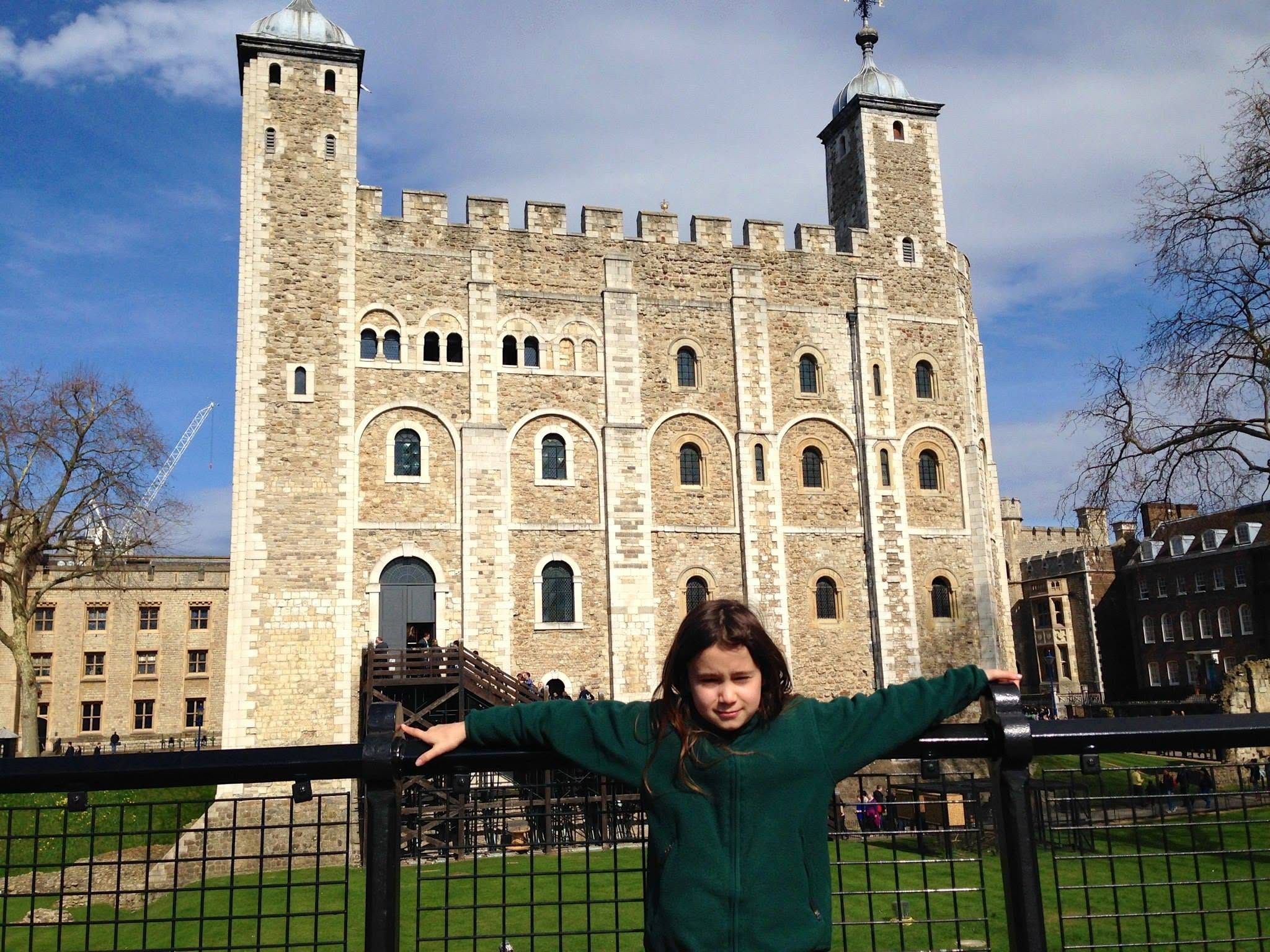
I think maybe we went inside St. Paul’s with the kids? We all went to London in March 2014, I distinctly recall seeing the view of the dome from Richmond Park. And I’ve got a photo of Juliana at the Tower of London.
Gratuitous SAT words.
Around Kindergarten age, Juliana happily read words in other languages, pronouncing them as best she could. We passed through Tahiti on our way to Australia and New Zealand in 2009, and Juliana laughed at the “Sortie de Secours” signs, which she pronounced “sorty skewers.” Later that year I bought her a “Sortie de Secours” in a Paris hardware store. It’s still above the door in her room. So when delivering the eulogy I remarked that she might pronounce circumspice as “sir come spice.”
I don’t remember exactly what age she was when she said this. She might have been nine, or seven. Still.
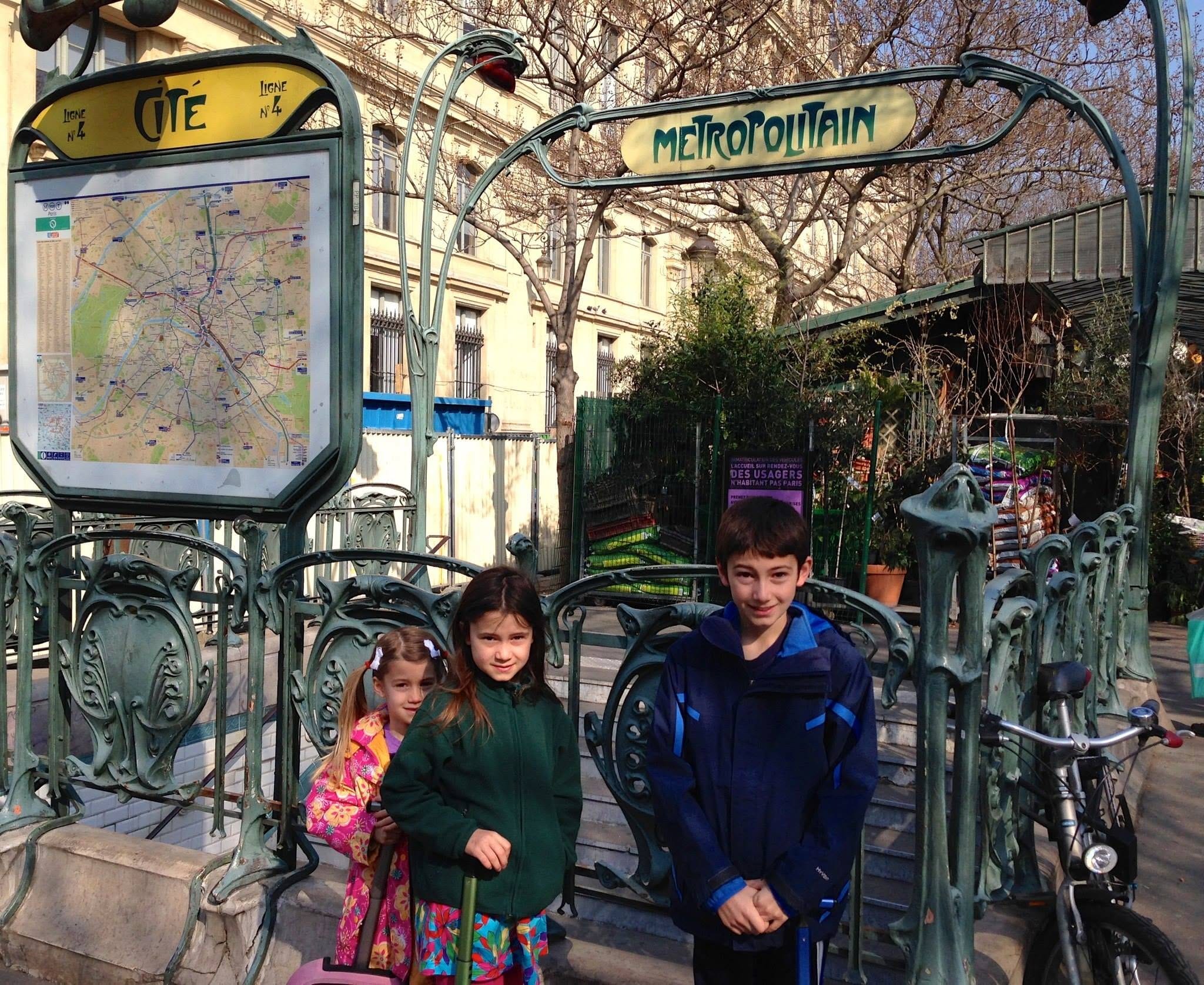
The “a propos” here was a late addition to gratuitously add a 5th language to the text. In Paris, on the same trip we went to London, two women approached us on the platform at the Alma-Marceau metro station seeking directions to the Louvre. They began in French, which I can speak maybe five words of, but quickly devolved to Spanish which was more familiar territory. Juliana would tell the story of that conversation after we returned.
“But you were mistaken, dear daughter.” We would often speak to one another in Spanish.
Another subtle nod to a song lyric, this time Bob Dylan, “Ballad of a Thin Man,” the song about Mr. Jones.
But nobody has any respect
Anyway they already expect you
To all give a check
To tax-deductible charity organizations
ek-klay-SEE-ah. The first draft originally made an etymological mistake, for I thought it was “Church” that orginated in a term for “assembly.” Indeed it is the Greek word, which is the root of the Spanish and French. So like the infamous dog that went to Yale, I did use both Latin and Greek, though the latter was unintentional.
Coincidentally I just heard a brief lecture on the history of the word ekklesia. My brother-in-law just graduated from seminary school and the speaker talked about this word and its meaning. Thank you for continuing to share Juliana's life with us and broadening her assembly. May perpetual light shine upon her.